The Future of Church
By Mel McGowan
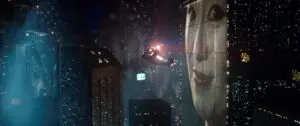
Does anyone remember when 2020 sounded like a great big beautiful tomorrow, full of optimism and hope? Unfortunately, the vision of the 1982 version of Blade Runner, set in a dystopian 2019, more closely resembles the societal division, social isolation, and media overload of today. The global pandemic served as a wake-up call, prompting organizations in the experience economy to rethink how they connect with their audiences in a post-COVID landscape.
Many of our clients in the destination business are now evaluating their long-term strategies to engage markets in new ways. Specifically, leadership teams are taking hard looks at their missions and reimagining the hybrid future of church. What once seemed impossible is now reality; the shift in cultural dynamics means that long-held dreams for innovation are finally becoming actionable plans.
Statistics show that only 32% of churches were streaming their services before March 2020, leaving the remaining two-thirds scrambling to establish an online presence during the lockdown. As we move forward, understanding future church attendance trends will be crucial for effective ministry planning and community outreach.
Thankfully there was one ready-to-go resource they could turn to. My friend Pastor Bobby Gruenewald of Life.Church says, “In times like these, the church is an important place of refuge for those seeking peace, comfort and healing. We’ve seen more than 30,000 churches in 158 countries sign up for our free Church Online Platform since March 1. Through online services, the church continues to reach people for Jesus and build community. God is not limited by the way we gather because the church isn’t about a building. It’s about the people.”
I’m thankful that Life.Church was obedient to follow God’s prompting years ago by creating this resource and making it available for free to churches all over the world.
Some have raised ecclesiological questions regarding online church. A Roman Catholic Pontifical Council declared, “The virtual reality of cyberspace cannot substitute for real interpersonal community.” A former Disney CEO summarized it for me when he stated that the more we are digitally connected and “cocooned,” the more we long for face-to-face connection in real space and time. As many people have articulated recently, the church doesn’t need to reopen, because it never closed. Real community, outreach, serving and breaking of bread happens every day, not one hour on Sunday. Rather than assuming the false dichotomy of real vs. digital, the postmodern answer is both/and.
One of the greatest storytellers of the last century was Walt Disney. He understood how to tell stories in two dimensions through media, as well as in three-dimensional destinations. In fact, Walt Disney World began with his original vision of a “city on a hill” in Florida to be called EPCOT, the Experimental Prototype Community of Tomorrow. It was planned amidst the American civil unrest of the 1960s to provide a new way of doing life together. Similarly, Disney’s Tomorrowland attractions in theme parks around the world are designed for people to have “adventures that are a living blueprint of our future.”
Unfortunately, Walt Disney passed away before his dreams of EPCOT were fully realized. But the exciting part was that he dreamed of the future.
You may be thinking now isn’t the time to think about the future because you are just trying to get people safely back in the door. But I say now is the best time. We can’t go back to what we just used to do. Church attendance rates before COVID-19 were at an all-time low, but many churches found that more people were attending online church services than their actual physical church.
Gone are the days where a church website served as a digital brochure designed to get people in a physical door. Digital placemaking has the ability to allow the purposes of the church to move beyond the walls of a building.
If churches of tomorrow are going to survive today, we need to start thinking more in the future tense. That’s why my partners Blake Ryan and Mike Goldsworthy and I started a podcast called Tomorrowland.Church to explore innovative ways that transformational leaders are reimagining the church for tomorrow. The podcast will include guests who are piloting future-facing technologies, and conversations around ideas that could add value to your church or organization.
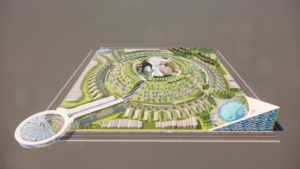
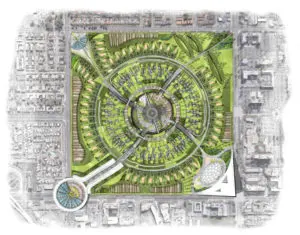
Guests will include former Pixar Technical Director Rich Hurrey, who recently joined our team to take his decades of experience to revolutionize digital discipleship and training. Conversations will include but also go beyond established Physical Placemaking (Architecture, Planning and Design) practice. For example, some of our current Digital Placemaking initiatives range from Q Media, which allows curated content to help navigate the complex intersection of faith and 21st-century culture, as well as Kitestring, in which students are currently developing a video game that will go to market (e.g., Playstation store). And tune in to hear about one of our current favorite projects, EDEN City (Ethos Driven Experimental Neighborhood).
Disney said, “All of our dreams can come true, if we have the courage to pursue them.” He also said, “Times and conditions change so rapidly that we must keep our aim constantly focused on the future.” May we make less time to get back to the normal and more time to get back to the future.