
A Clear Definition of What Is Repentance
The word “repent” is often misunderstood, frequently carrying a negative connotation. It is a term many associate with the sandwich boards of street preachers warning of divine vengeance. However, like many common ecclesiastical terms, its meaning has been hijacked by modern culture and infused with inaccuracies. Understanding what repentance truly means is essential, as it was the foundational call of both the prophets and the apostles to those seeking to follow the God of Israel and His Son, Jesus. Because following Jesus involves a lifelong process of transformation, we must grasp the true depth of this word.
Contrary to popular belief, repentance is not merely about stopping a specific behavior. While it involves ceasing certain actions, the core definition of the word is to “turn.” Turning is distinct from stopping; you can stop and remain motionless while still facing the same direction. Repentance requires a conscious choice to turn toward something better—specifically, choosing life with Christ over anything else. It is a deliberate focus on turning from sin and toward grace.
I’d propose, then, that we have at least three common misunderstandings about it means to repent:
1. Repentance means stopping.
The emphasis remains on the change of direction and the recognition of a need for spiritual realignment. This is why recognizing repentance in restoration is so vital to the Christian walk. True repentance is more than a simple apology; it is a total transformation and a commitment to a new way of living in alignment with God’s will.
So repentance isn’t about stopping what you’re doing; it’s about valuing Jesus more than what you’re doing.
That’s why we turn; not just because old ways are self-destructive, wrong, or immoral; repentance is about how much we value Christ. And how much we believe He’s better than anything else.
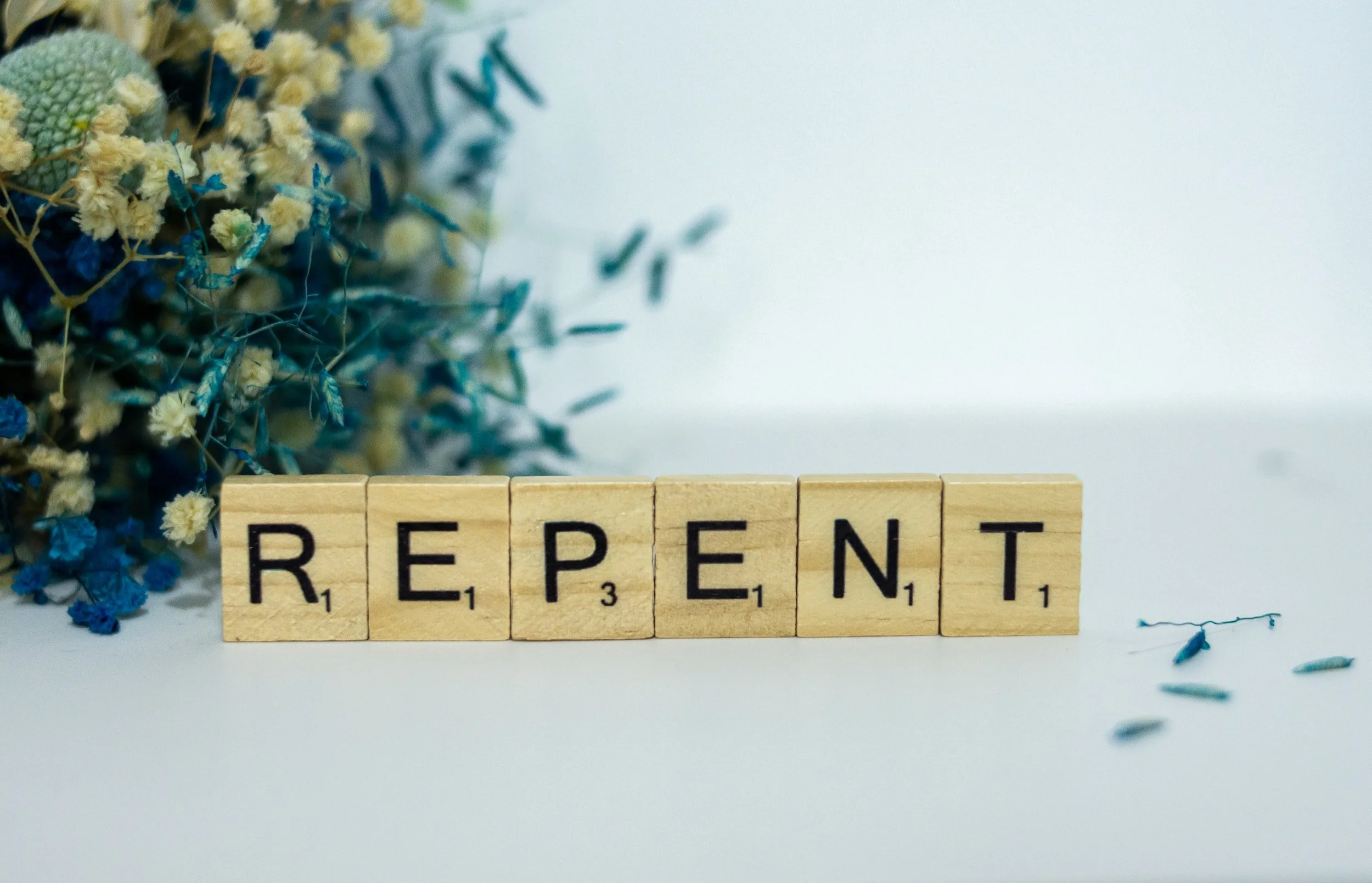
2. Repentance is a message of judgment.
It is, of course, some about judgment. This was the focus of many of John the Baptist’s recorded sermons: “Brood of vipers! Who warned you to flee from the coming wrath? Therefore produce fruit consistent with repentance” (Matt. 3:7-8). But if repenting is not just stopping but turning, and if the message of repentance is about ultimately choosing to turn to that which is ultimately satisfying and joyful, then this is nothing less than a message of great love.
When God calls us to repent, He doesn’t do so as a cosmic killjoy; He does so as a Father discontent in His love for His people to see them piddling around with the temporal pleasures of the world. He has something better for us, and in His love, He calls us to turn.
That’s why it’s not anger in the voice of God that says “Repent.” It’s love. It’s a voice that says, “You are settling. Don’t you want something better?”
3. Repentance is about willpower.
Like the first two things, repentance is a bit about willpower, but we are mistaken if we think that the willpower is the driving force behind it. It’s not. And thank God it’s not, or we would never truly repent for our willpower is embarrassingly and pitifully weak.
Repentance is about faith. That’s important to note because rarely, if ever, do we feel like repenting. We don’t; we feel like sinning. But in the midst of the temporary pleasure of sin, there is the kernel of faith inside us that chooses to believe that even though we don’t feel it in the moment, life and fellowship with Jesus is better than this.
In faith, then, we turn, painful though the turning may be. And having turned, and then having begun walking in the opposite direction, we find that the feelings do indeed follow.
Read more from Michael Kelley »
This article originally appeared on thinke.org and is reposted here by permission.
