


One of the most time-tested and well-known songs of the Christian faith is “When I Survey the Wondrous Cross” by Isaac Watts. He is the same prolific writer behind “Jesus Shall Reign Where’er the Sun,” “O God, Our Help in Ages Past,” “Alas! and Did My Savior Bleed,” and the Christmas classic “Joy to the World.” Throughout his life, Watts composed over 700 hymns, yet he grew up in an era where worship music consisted strictly of psalms or Scripture set to melody. Watts found this practice monotonous and uninspiring.
To him, there was a noticeable lack of joy and emotion among the congregants during worship. He once famously remarked, “To see the dull indifference, the negligent and thoughtless air that sits upon the faces of a whole assembly, while the psalm is upon their lips, might even tempt a charitable observer to suspect the fervency of their inward religion.”
Challenged by his father to improve the state of congregational singing, Watts began a lifelong pursuit to write lyrics that exalted Christ. This mission transformed the landscape of worship music, directing the hearts of believers toward their hope in His cross-led reconciliation and leadership.
So if we follow with Watts, and we too survey the wondrous cross, what will we see? We will see more clearly at least three things:
1. The cross brings clarity to the true problem.
We find ourselves living in an ironic time. Never before has the world seemed so convinced that people are basically good if we give them a chance, and yet never before have so many of been wondering what’s wrong with the world. The cross brings clarity to the true problem.
While the question of “what’s wrong with the world?” might have many potential answers, they are all really offshoots of the true answer.
So what’s wrong with the world? Poverty? Homelessness? Violence? Dishonesty and lack of integrity? Yes, and yet the true problem is sin. Not just the acts of sin, but the state of sin in which we all live. We, and the rest of the world, are broken.
And we see how severely at the cross. The cross shows us with stark clarity just how desperate the situation is – so desperate, so evil, so wrong that the perfect Son of God had to suffer and die.
2. The cross brings clarity to the character of God.
The cross also shows us clearly the character of God. We might look around the world, and even to the circumstances of our own personal lives, and have all sorts of questions about God. Where is He? What is He doing? What is He like? We ask these questions not in a vacuum, but against the backdrop of school shootings, cancer, and global threats. But the cross brings clarity to who God is.
At the cross, we see that God is committed to justice, for He is unwilling to compromise on the just punishment for sin. At the cross, we see that God is committed at the same time to love, for He is unwilling to allow sinful humanity to bear the price for that sin.
The cross is the window through which we see the demonstrated character of God; it is a stake in the ground by which we can say, “This is who God is,” regardless of what other circumstances befall us.
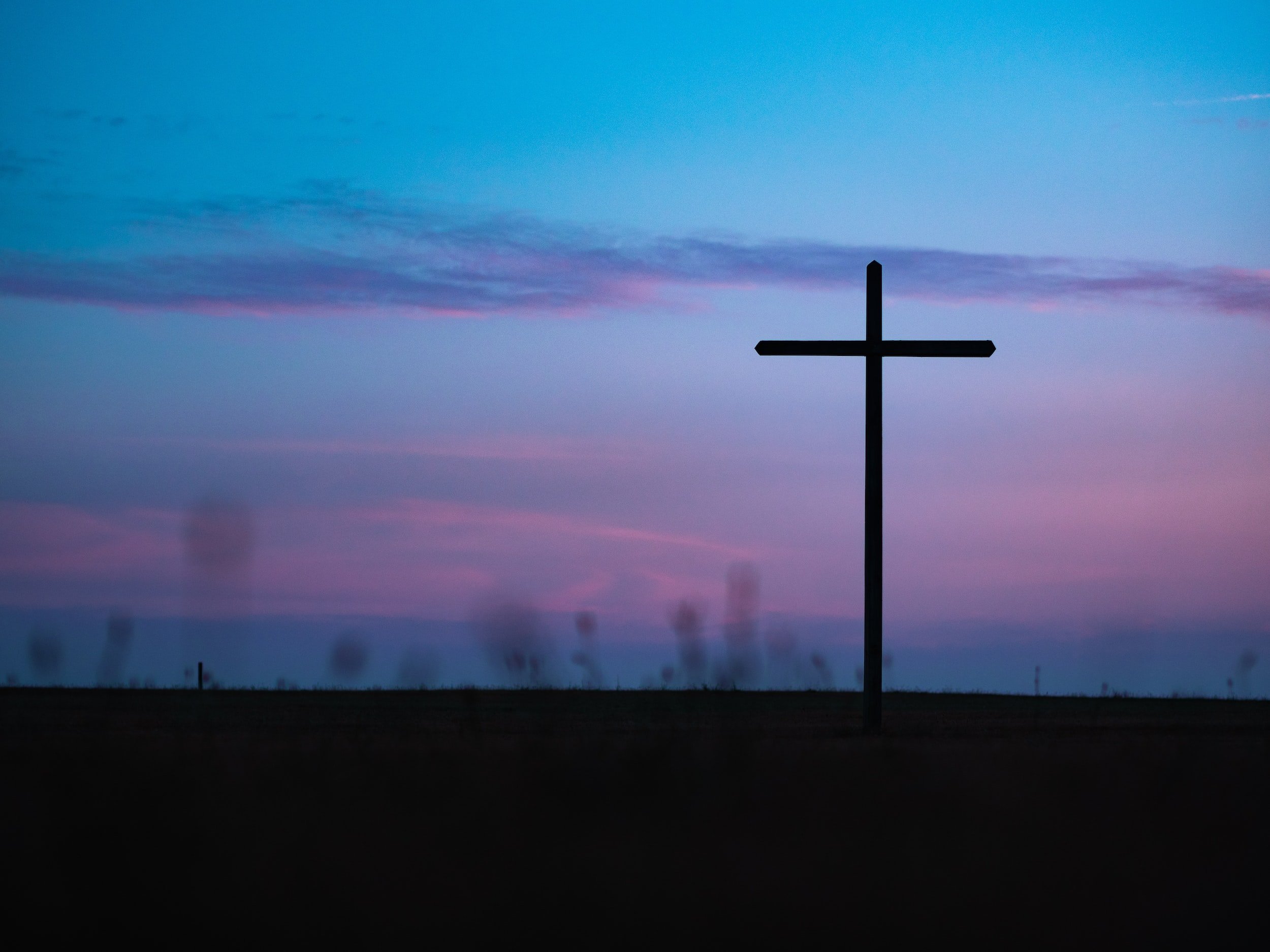
3. The cross brings clarity to the future.
Finally, the cross brings clarity to the future. And that’s because the cross was not the end. Jesus died, and Jesus rose, and is gloriously alive today. In His life, we have life. It’s the cross and the resurrection that shows us exactly where we are headed.
Either we are headed to resurrection with Jesus, to reign with Him as forgiven, blood bought co-heirs, or we are headed to the ultimate and consequence of our cosmic rebellion.
Further, the cross and resurrection shows us that creation is bending toward the recognized rule and reign of Jesus. That there will come a day when every knee will indeed bow and every tongue will confess what the Christian already knows – that Jesus Christ is the resurrected Lord of all. This is the future.
Though we might still have questions about the days in which we live, of these things there is no doubt. The cross helps make them clear if we will survey it, again and again.
Read more from Michael Kelley »
This article originally appeared on thinke.org and is reposted here by permission.