
Pastoral Succession: Libin Abraham on Following a Legend
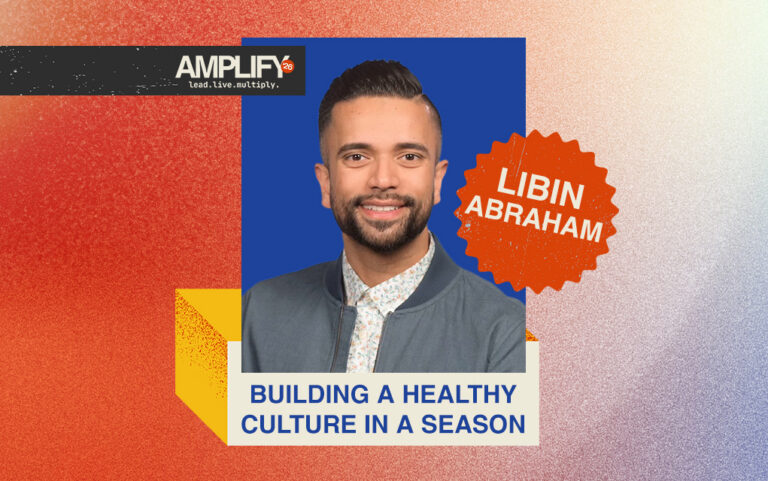
Two years ago, I was preparing a convention sermon and the Lord [laid on my heart] it’s not about where the church is going, it’s about who the church is becoming. What are the core ethics in a time where a lot of things seem to be changing? What are the things that are not changing? And how do we lean into what the Holy Spirit’s doing and really become this new kind of church with people that God’s brought from all around the city, all around the world? Even our worship style has changed tremendously, and prayer culture and all of that.
I would summarize it by saying that succession is not about imitation, but trusting in the Lord’s gifts in your life, and that he has equipped you and shaped you for a moment like this. And allowing the Holy Spirit to shape the church to who he desires the church to be and leaning into the stories of the people. You’re there not just to be a preacher, but to be a pastor, and that can only happen through presence and meals and living room conversations.
What do you think have been some of the keys to developing a culture of discipleship, evangelism, and outreach at your church?
Bent Tree for the majority of his history had a strong focus on global missions. We’re celebrating 25 years of our ministry in India reaching one of the most unreached people groups. We just had this heart for global missions. But over time, I think, maybe inadvertently or unintentionally, missions became something out there, so we were engaging with our local neighborhood less [often]. We do surveys [measuring our church’s health] every year, and the lowest score we had is evangelism. It’s local engagement with people who are lost.
People knew that, but we weren’t bothered by it as much as we should have [been]. So when I first came, we recognized we needed a shift from survival to revival. The church needed to focus on survival for a while because we were going through COVID-19 and transition [because the] lead pastor had left. But there’s lostness in our community. There’s brokenness right around us. So we did something called the Sent Campaign. For us that was really to help people understand every Christian is called to Jesus and sent to people. It’s not that some Christians can follow Jesus and then they graduate in discipleship and then some get the extra credit of being on mission or being an evangelist. We wanted everyone to know every Christian is a missionary. You are sent. In fact, missions or being sent isn’t what you do, it’s core to your identity.
So here at Bent Tree leaders really want to anchor a lot of this in our identity. Jesus said in John 20: “As the Father has sent me, I’m sending you.” The very core of who we are is a sent identity. We spent two years really driving this home. We had all kinds of stuff to measure faith conversations, and we had this massive machine where every time you had a faith conversation you put a ping pong ball in. We were not measuring outcomes. We were just measuring obedience and what’s happening within the life of the body. And you can tell us how an ordinary person sitting at work or at Starbucks one day just stepped into a spiritual conversation. We made it really easy and accessible for people.
