
Pastoral Succession: Libin Abraham on Following a Legend
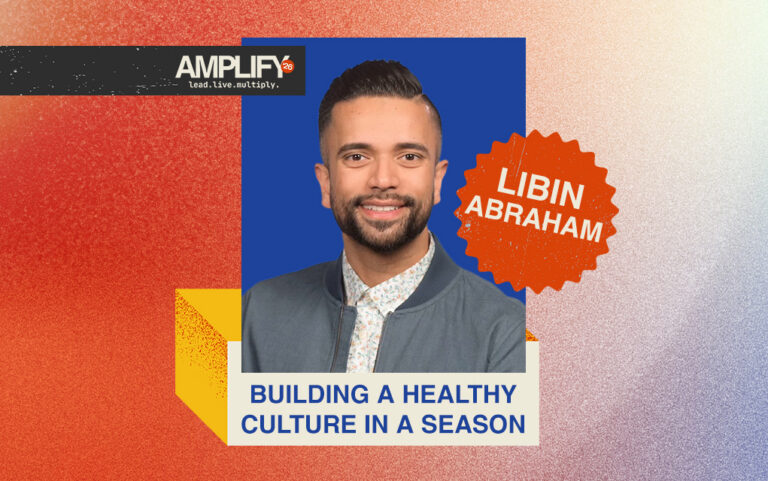
When Libin Abraham became lead pastor of Bent Tree Bible Fellowship in Carrollton, Texas, he was succeeding longtime pastor Pete Briscoe and stepping into a church about to celebrate its 50th anniversary. A tall task for any new leader, but he was also tasked with leading the church through the COVID-19 pandemic.
At the upcoming Amplify Conference, October 20–21 at Wheaton College, in partnership with Outreach magazine, Abraham will be sharing more about how he navigated the process and helped lead the church into a new season of thriving ministry.
In the conversation below, he discusses some of the keys to a smooth succession process, and how he and the church’s leadership team has developed a culture of evangelism, discipleship, and intimacy with God over the past five years.
You followed a very visible longtime leader at Bent Tree. What are some of the things that helped you transition the congregation and acclimate them to having a new leader?
Honestly, I think one thing that helped was there was a two-year gap between Pete Briscoe and myself. In those two years we had some amazing, gifted leaders leading. I wasn’t just stepping into the pulpit after someone like Pete. The church had gone through a season of grieving the loss of a long tenured lead pastor. And COVID-19 was in the middle of all those things. So it was naturally a time of transition.
I think for me, beyond the uncontrollable circumstances of that time, [it] was just letting the church know that me and the last lead pastor were going to be different. He has gifts that I don’t have, and hopefully I can bring some uniqueness to Bent Tree. Succession is not about imitation. It’s really about who has God made me, and how can I step into that comfortably and boldly and courageously to lead us forward into where we feel the Lord is calling us?
When I first started, I felt more like a preacher, like I’m coming to speak to our church. But then really knowing the stories and the people’s journey and their faith struggles I felt like a pastor. It was through not just a sermon, but through presence and just just being with our people and being with our staff, understanding, discerning where our church has been and what the Lord’s been weaving through the narrative of who we are as a church that I really felt like I could pastor us. I would say it probably took two to three years for me to feel like, OK, I think I know enough to lead us forward.
Before I started, one of the things that I’m so glad I did—I was given this advice by a mentor. He said, “Gather 200 to 250 people from your staff and elders to learn about our struggles and what’s been a beautiful part of our church’s history. Get a variety of people and learn about where their story has been.” So I just started making phone calls every day, getting to know the story and how people were feeling connected and those kinds of things. Over a couple of years, I felt like, OK, I think I can move us forward because I’ve taken the time to earn the right to be their pastor.
[In our case] within three years half of our church was brand new. So in one way, the church was welcoming a new pastor, but in another way the church was becoming a new congregation altogether. Even as we come to our 50th anniversary, God has actually formed us and shaped us into a new type of church.
