
Joby Martin: Why “Pace Is a Myth” and Faithfulness Wins
THE CHURCH OF ELEVEN22
Jacksonville, Florida
Website: COE22.com
Denomination: Nondenominational
Founded: 2012
Largest: 9
When Pastor Joby Martin thinks about finishing his time in ministry well, his goal is not to reach a certain benchmark, nor is it to fulfill a particular vision.
“I think it’s very, very important just to be faithful with what God has trusted you with,” says Martin. “And if he decides to give you more, praise God. And if not, praise God. Just do what he told you to do.”
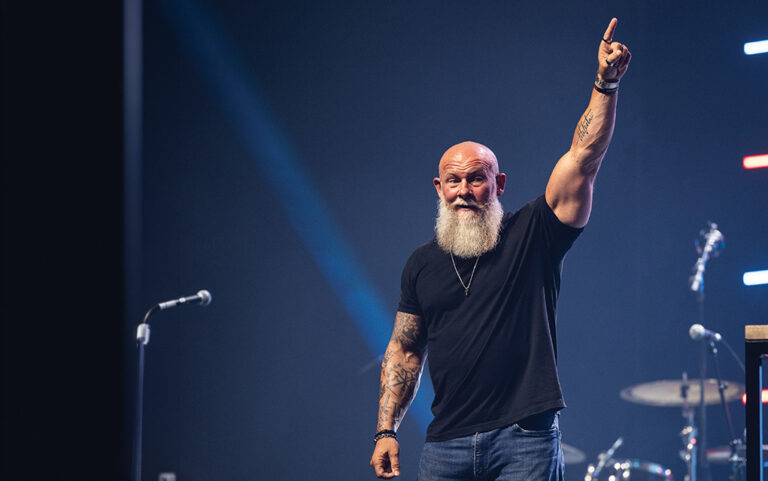
Martin is the founder and lead pastor of The Church of Eleven22 (No. 9, largest; No. 1, fastest-growing) in Jacksonville, Florida, a multisite megachurch that currently averages between 32,000 and 35,000 people on a typical weekend.
Yet Martin never intended to be a preacher; at one point, he expected to spend his life as the youth pastor of a small church where he started with only three students.
But throughout his life, Martin simply has followed where God has led him. And that is how he intends to finish his race—and what he encourages his fellow pastors to focus on in their own ministries.
“We sing and talk like everybody else,” he says of The Church of Eleven22. “We all preach from the same Bible. I have no idea why God would save so many people at our church. I mean, there are some things you can do to prevent it, but you can’t make it happen.
“But the brother that’s out there just serving faithfully at the church that God has assigned him to, when he gets to heaven, he gets the same reward: ‘Well done, good and faithful servant.’”
You have described yourself as an “accidental church planter.” Looking back on your journey, where do you most clearly see God directing your ministry, even when you didn’t realize it at the time?
I was called into ministry when I was 19, when I first started working at church. By the time we moved to Jacksonville, Florida, in 2003, I’d been in youth ministry that entire time. And I was just making disciples of the people who were right in front of me—students.
I thought I was going to be a student guy forever. I had no aspirations of anything else. And I definitely wasn’t trying to use student ministry to get to the next thing.
Then my pastor, Jerry Sweat, and other leaders began to give me more responsibility and more opportunities. I started preaching in “big church” more often. So becoming a lead pastor wasn’t my idea at all. I was kind of “voluntold” that this is what I was going to do.
It goes all the way back to when I preached my very first sermon. I was on staff at this camp where I had gotten saved a couple of years before. The guy who ran it and I were standing in the back of the room filled with maybe like 100 high school kids.
Coach, the guy who had led me to Christ, leaned over and said, “When the singing is done, you’re going to preach.” And I said, “In, like, two minutes? Coach, I’m not comfortable speaking in front of people.”
Just imagine—it’s the late 1980s, and he is a South Carolina high school football coach. And he said, “Comfortable? Boy, did you say comfortable? You think Paul and Silas were comfortable in prison? Boy, do you think Daniel was comfortable in the lion’s den? Boy, do you think Jesus was comfortable on the cross?”
“No, sir.”
He goes, “So you’re gonna preach?”
“Well, what do I talk about?”
He said, “Talk about Jesus. Talk about 30 minutes. Go.”
I got up in front of everybody and preached on John 3:16 because that was kind of the only verse I knew. And when I finished, Coach came up to me and put his finger in my chest. “Boy, when you preach, I see two things happen. I see you come alive; I see them come alive.”
I said, “Coach, I am never going to be a preacher. So don’t worry about that.”
A couple of years later, I felt called to ministry.
The COVID-19 pandemic was a milestone in our wider culture. Would you say there have been some key lessons God has taught you personally in the past six years or so?
The biggest thing I learned in COVID-19 as a leader is that no matter what decision you make, it’s always just like Goldilocks and the Three Bears. That’s the response you are going to get. For some people it is too much, for some people it is not enough, and for some people it is just right.
I think the best leadership advice in the whole Bible is John 2:5 where Mary tells the servants at the wedding at Cana, “Do whatever he tells you.” And then you cannot let how people respond to that be the primary indicator whether you’re doing the right thing or not.
So we opened back up, and some people were like, “This is way too fast.” And then some people said, “I don’t think you’re even a Christian because you didn’t meet on Sunday for six weeks.” Both of those groups kind of left.
Also we were committed to just keep primary things primary. We had always been about the gospel. We would always be about the gospel. We were not going to make secondary things primary and get lost in all the social upheaval.
The people that were with us stuck with us, and they all went and got three or four friends and brought them [to church] with them. And we’ve probably tripled in attendance since COVID-19.
