
Building for the Storm: A Stronger Foundation for the Church
By Rob Hoskins
A few years ago, my wife and I began dreaming about having a home on property we owned on a deep-water canal in Florida. I could already picture the dock and the sunset.
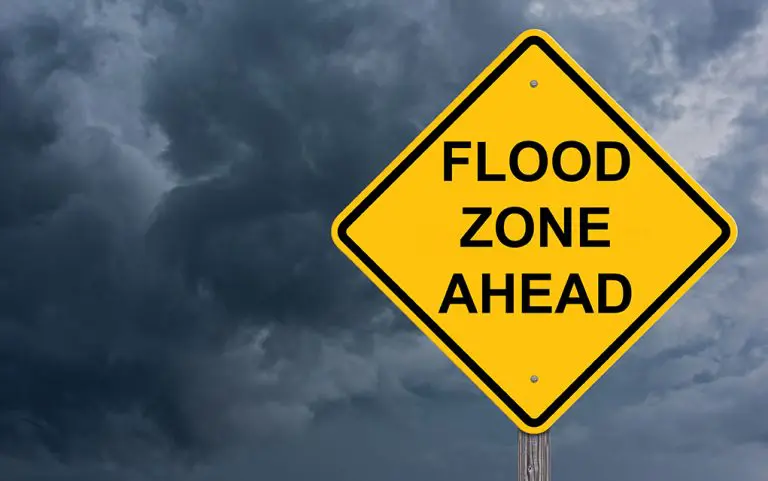
Then the engineer sat me down. Because our property sits in a Flood Zone VE, exposed to storm surge and wave action, we wouldn’t be able to build in the typical way, he explained. Instead, we would have to have an open foundation on deep piles driven far beneath the surface. This would be slower, more expensive, and uglier during construction. Yet, when a storm came, it would be the only kind of foundation worth having.
The more I reflect on our world, the more convinced I become that the church is building in its own kind of Flood Zone VE. The question is not whether a storm is coming; it’s whether we’re building for it.
When the wind picks up, our temptation is to pour a slab. We have meetings, join a coalition, release a statement. We often build this way because it feels safer. Quick responses and clear sides give us the illusion of stability in an unstable world. But a slab is a shallow foundation, and shallow foundations get swept.
In Jeremiah 37, the prophet tries to slip out through the Benjamin Gate on family business. A captain named Irijah seizes him: “You are deserting to the Chaldeans.” Jeremiah answers, “That is false.” Irijah doesn’t listen. He beats Jeremiah and throws him in a pit.
Irijah’s error was a category mistake. He could imagine only two teams. That Jeremiah answered to a higher word—one that judged Jerusalem’s corruption and Babylon’s cruelty—was simply not available to him.
RELATED “ARTHUR C. BROOKS: REAL HAPPINESS”
Every generation of the church has its Benjamin Gate, and ours is now. A political position reads our silence as betrayal, while a cultural moment reads our fidelity to Scripture as offense. Both are Irijah at the gate, and both are trying to hold the church hostage.
I don’t think Irijah’s mistake began with politics. It began with fear. A divided world feels easier to navigate when everyone can be sorted as either with us or against us. When we’re afraid, certainty feels safer than discernment. We tell ourselves we’re defending the truth when often we’re trying to protect our sense of security. That’s what Irijah was doing. His accusation wasn’t born out of careful discernment; it was born out of a need to make the world feel manageable.
Fear has a way of disguising itself as wisdom. Decisions that seem prudent, strategic, even faithful can quietly become attempts to preserve what feels threatened. We begin protecting influence, institutions, reputations, or cultural standing because they feel tangible. But Spirit-led wisdom asks a different question—not, “What will preserve us?” but, “What is Jesus asking us to do?”
Jesus never promised his followers a life free from storms. He didn’t tell them to stop longing for security. Instead, he showed them where to relocate it. “Whoever would save his life will lose it, and whoever loses his life for my sake will find it” (Luke 9:24). When our confidence is rooted in Christ rather than in cultural influence, political outcomes or institutional success, we are finally free to lead without fear.
Sociologist James Davison Hunter has called the church to “faithful presence within,” the ability to remain fully present in culture without being absorbed by it. I would press one step further: Faithful presence becomes fruitful presence only when our confidence is rooted in Christ rather than in whatever cultural structure promises us safety.
Jesus was clear about the criterion: “I chose you and appointed you that you should go and bear fruit—fruit that will last” (John 15:16). Faithful presence tells us where to stand; fruitful presence asks whether anything is growing where we stand.
So the honest question isn’t whether we can recognize shallow foundations in others. It’s whether we can recognize them in ourselves. What are we so afraid of losing that we’ve begun building our ministries around protecting it instead of trusting Christ with it? And what would it cost us to stop building for the moment and start building for the storm?
Missiologist Lesslie Newbigin said it plainly: “The only hermeneutic of the gospel is a congregation of men and women who believe it and live by it.” The local church, anchored in Christ and formed by Scripture across generations, is the deep column. It isn’t a program to be scaled but a foundation to be sunk.
