
How Maryland Community Church Is Growing by Serving Its Community
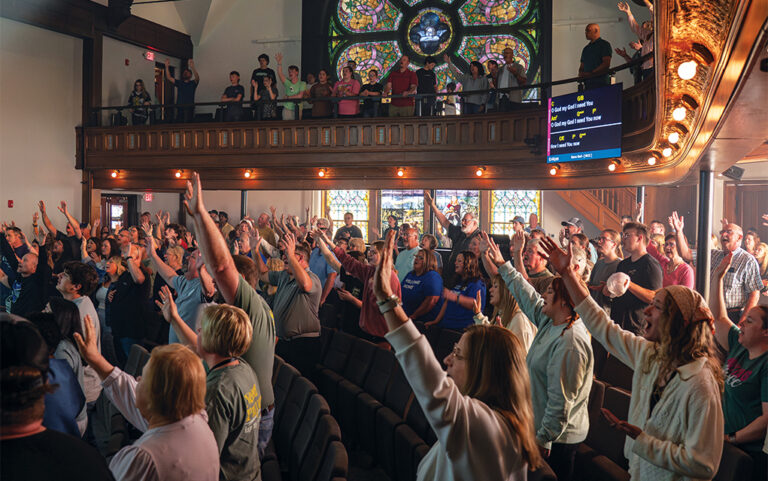
Maryland Community Church (MCC) in Terre Haute, Indiana, recently celebrated the 100-year mark, but its growth story is anything but old. What’s striking is how a church with such deep history has managed to stay nimble, mission-focused and relentlessly people-centered.
According to Strategic Operations Pastor Jim Pendleton, the secret is clarity, compassion and a fierce commitment to raising up the next generation of believers. He says the church’s growth begins with a simple but powerful discipline: repeating who they are and why they exist. Every staff meeting and worship service starts with the same reminder.
“We are a community of people following Christ and serving in his cause,” Pendleton explains. “Our mission is to help people take one step closer to Christ.”
That repetition keeps the church’s identity front and center so that every ministry, decision and new initiative flow from the same heartbeat. Pendleton believes this clarity has been one of the most significant drivers of growth, especially as the church expanded to multiple campuses.
This clarity also shapes how Maryland engages with its community. Terre Haute and the broader Wabash Valley carry deep pockets of poverty, addiction and family instability. Maryland has intentionally positioned itself as a place where people can come exactly as they are and encounter Jesus in a way that leads to healing and transformation. That posture has drawn people who might never have stepped into a church otherwise.
Engagement through empowerment makes all the difference. The church’s focus on next-generation ministry means that they treat children and students as current (not future) leaders.
“There’s no such thing as a junior Holy Spirit,” says Pendleton.
Elementary students lead worship through Kids Praise. Middle and high school students lead Wednesday night programming. Graduating seniors often step into adult worship teams. Peer leadership is a game-changer.
“If you put an elementary student on stage to share a faith story or a high schooler to teach a lesson, their peers lock in,” he adds.
The next-gen ministry growth has been so significant that this fall the church is launching a dedicated young adult ministry for ages 18–29, completing a full birth-to-29 discipleship pipeline.
Outreach is another major growth engine. Maryland’s student ministry hosts large-scale recreational events such as dodgeball tournaments, zombie nights and capture-the-flag battles where youth invite their spiritually curious peers to join them. These aren’t just fun nights; they’re strategic on-ramps into small groups, relationships and discipleship.
Children’s ministry mirrors this with “plus-one” events and a massive biennial VBS-style program called Adventure Week, a high-energy, gospel-saturated outreach that draws families from across the region.
One of Maryland’s most distinctive ministries is its deep involvement in foster care and family restoration. Several years ago, church leaders met with the mayor to discuss the region’s most pressing needs. They learned that the area department of child services was overwhelmed as Vigo County had one of the highest rates of child removals in the state.
MCC responded with more than a program; they focused on presence. The church launched Refuge, a local mission focused on supporting vulnerable families. One of its most impactful expressions is the Hope House, a renovated home where children can stay safely after being removed from their homes, and where parents can meet with their kids in a warm, welcoming environment instead of a sterile office. Volunteers staff the house 24/7, offering laundry facilities, care bags, comfort and compassion.
The stories of reunification that come out of Hope House are so powerful they’ve inspired other churches to call Maryland asking how to replicate the model.
More recently, the church launched Refuge Kids, a childcare ministry for families working through court-ordered steps toward reunification. It’s a holistic approach to meeting families in crisis with the love of Christ.
Pendleton notes that families connected to Maryland Community serve approximately 20% of all foster children in the region—a staggering statistic that reflects the church’s commitment to living out the gospel beyond Sunday mornings.
It’s not uncommon for people to be apprehensive about coming to a big church because they fear getting lost in the shuffle and becoming just a number. Therefore, MCC makes sure to care for people by intentionally developing personal relationships, fostering discipleship through prayer, and introducing people in the community.
“No matter how big we get, our systems need to grow and change,” Pendleton says. This is why as the church has grown, the staff has recognized the need to multiply leaders at every level.
“We can’t manufacture spiritual transformation,” he says. “Our job is to create opportunities for people to encounter Jesus. We trust God with the results.”
Michael Moore has been involved in church and ministry his entire life, but he says he’s never experienced God moving and working in the lives of his people like he has at MCC. Moore calls it an “unapologetic worshiping church.”
“I’m a firm believer in, ‘Find where God is working, and join him there,’” he says. “God is definitely at work at MCC, and it’s been such a privilege to get plugged in and be part of what he’s doing.”
MARYLAND COMMUNITY CHURCH
Terre Haute, Indiana
Pastor: Scot Longyear
Website: MCCTH.org
Denomination: Independent Christian Churches
Founded: 1925
Fastest-Growing: 33
