
Where Is Your Focus?
What Not to Fear
If there’s one lingering reason church leaders are tempted to focus on who we want to keep instead of who we want to reach, I think it’s fear. We’re afraid that people will leave. We’re afraid of who they’ll take with them. We’re afraid of what they’ll say about us to others. We’re worried about the financial impact of people leaving (even though they’ve likely checked out financially long before they’ve checked out of the building). We hate disappointing people. We don’t like to be disliked. We don’t want to be unpopular.
All of those are understandable reasons. But none of them is a good reason. Actually, they are selfish reasons. I’ve felt those fears as a leader. When you start to move through these fears, you grow as a person and as a leader. It’s not fun growth (the fear is there because you think it’s real), but it’s powerful growth. A leader who learns that it’s about far more than just how popular he or she is can actually develop a deeper humility in the process of developing a greater courage. Leaders like that are worth following. They have moved past leadership being about them and their insecurities. They are not leading for the sake of themselves. They are leading for the sake of Christ and others. And what those leaders discover, after some painful moments, is that there is freedom on the other side of their fear.
Fear This
Okay, having just tried to convince you to move past your fears about change, I’m going to tell you now to do the opposite. There are some things I think a leader should fear. But they are very different from what we naturally fear.
So what should leaders fear? I think we should fear never reaching the people we’re trying to reach. While you may have had some success in reaching some of the unchurched in your community (some of you, actually, have had incredible success), there are still more unreached than reached. Unless you bring about the change you’re looking at, you are unlikely to reach them at all. So when you consider the 10 or 100 who might leave your church if you change, just pause to remember the almost 10,000 who aren’t coming because, so far, you have failed to change. Maybe as leaders we need to start fearing that.
And here’s another thing to fear. If you’re worried about losing people, start worrying about losing the Early Adopters and Early Majority. They may not be as loud as the Opponents, but if you fail to change, at some point over the next year or two, you might lose many of them. They won’t storm out angrily and they might not even tell you they’re going. But if you continue to embrace the status quo for fear of the cost of change, many of them will slip away. That’s true in traditional churches that are transitioning and in churches with a track record of past success. The greatest enemy of your future success is your current success. So deciding that you will continue to do what progress requires (even if your church is relatively new) will ensure you keep the right people in your organization. Listening to the quieter voices ensures you’ll hear your organization’s most important voices.
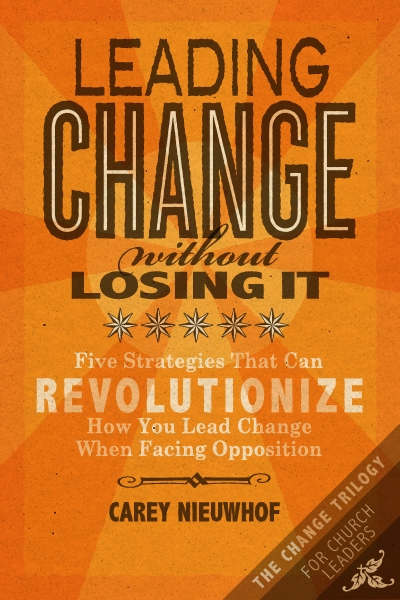 This excerpt is taken from Leading Change Without Losing It: Five Strategies That Can Revolutionize How You Lead Change When Facing Opposition by Carey Nieuwhof. © 2012 by Carey Nieuwhof. Used by permission of The reThink Group. All rights reserved.
